
Automation in the Workplace: Ramsey County Prepares for the Future of Manufacturing
September 22, 2025
Automation has gravitated beyond buzzwords to literal, powerful forces actively reshaping entire industries nationwide. In Ramsey County, MN, this shift is especially visible in manufacturing, where automation is redefining job roles, increasing productivity, and opening up new avenues for career growth. The next five to ten years are critical as labor shortages, productivity increases and global competition are expected to persist.
“This is the future of manufacturing,” said Myrika Schneider, Director of Workforce Development with the Minnesota Precision Manufacturing Association (MPMA). “Wouldn’t you rather be on the leading edge than playing catch-up?”
For an overview of automation in Ramsey County manufacturing, read this previous article: Ramsey County at Work: A Transformation of Technology and Talent. The piece examined automation’s broader impact across the regional economy, based on the RealTime Talent webinar titled, Top Trends to Watch in Ramsey County’s Workforce Landscape, hosted by Ramsey County Workforce Solutions earlier this year.
Automation vs. AI: What’s the Difference?
Schneider states it is important to understand the difference between automation and artificial intelligence (AI), which are often lumped together but are distinct technologies.
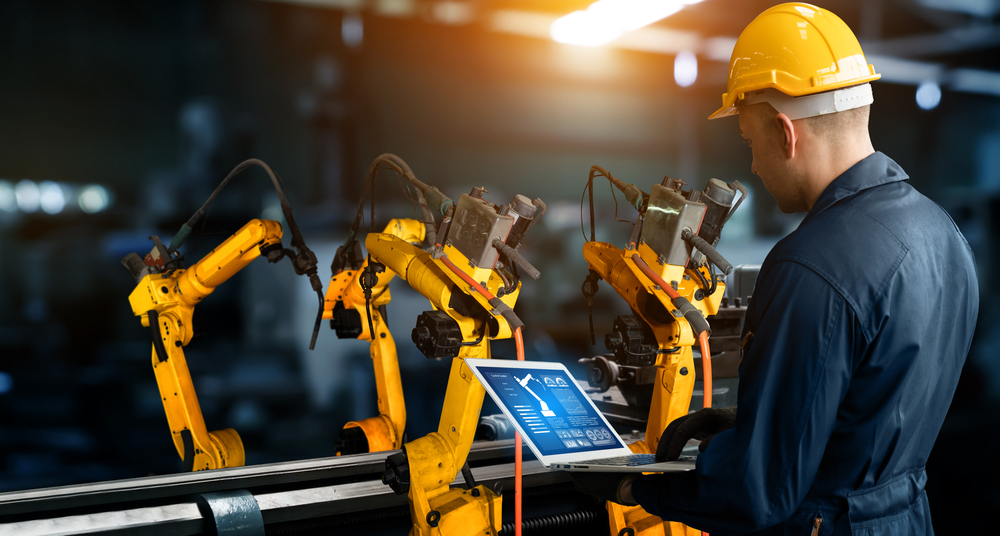
- Automation involves machines or systems programmed to perform repetitive tasks, such as robotic arms assembling parts or conveyors moving materials.
- AI refers to systems that learn from data, recognize patterns, and make decisions, like predictive maintenance software or customer service chatbots.
In Ramsey County, automation is more visible on the factory floor, while AI is gaining ground in backend operations. These technologies are converging to power hyperautomation, where entire workflows, not just tasks, are automated.
“Automation doesn’t mean people go away,” Schneider said. “It means the kind of work people do is changing.”
Rather than eliminating jobs, automation in manufacturing is creating new technical roles, improving safety, and enhancing productivity, especially when paired with a strong human workforce.
The Rise of Dual-Skill Roles
The growing role of automation means today’s manufacturing jobs require a blend of technical and human skills. Employers now seek workers who are not only tech-savvy but also adaptable, collaborative, and creative. According to data shared in the Top Trends to Watch in Ramsey County’s Workforce Landscape webinar, roles that traditionally required fewer interpersonal skills are now 20% more likely to list human skills in job descriptions than in 2018.
“Robots don’t just program themselves,” Schneider said. “You still need someone who knows how to run them, maintain them, fix them, and think critically when something breaks.”
Robotics: A Career Gateway
When asked what young people should be learning today, Schneider’s answer is clear: robotics.
“If you’re not looking at robotics, you’re going to fall behind,” she said. “The opportunities in that space are endless right now.”
Students can participate in short-term robotics certifications, some completed in as little as a week, available through school districts and community organizations. Nearby universities offer advanced degrees, but several Ramsey County technical and community colleges offer certificates or training programs.
- Concordia University’s Career Training program has an online Robotics in Manufacturing Fundamentals course that provides a starting point for a robotics career by covering applied math, manufacturing basics, and robot components.
- Saint Paul College has manufacturing programs that can be a good foundation for a robotics career, with coursework in automation, industrial maintenance, and machining that overlaps with robotics principles.
Real-World Innovation on the Shop Floor
The effects of automation are not evenly spread across the county. Saint Paul experienced a 37% rise in 2024 in AI-related job demand, but surrounding communities have experienced slower growth. Manufacturing is uniquely positioned to bridge this divide, creating accessible, well-paying jobs through short-term training and on-the-job experience.
Instead of eliminating jobs, the system allowed workers to take on more valuable roles, boosting productivity and morale. Automation can help improve decision-making, streamline processes, and accelerate development, but it is at its best when paired with human insight and creativity.
Looking Ahead: From Challenge to Opportunity
The effects of automation are not evenly spread across the county. Saint Paul experienced a 37% rise in 2023n in AI-related job demand, but surrounding communities have experienced slower growth. Manufacturing is uniquely positioned to bridge this divide, creating accessible, well-paying jobs through short-term training and on-the-job experience.
Automation is not something coming someday: it’s already here, actively transforming how manufacturing work is done in Ramsey County. But far from signaling job loss, this transformation opens doors to higher-value work, lifelong learning, and economic mobility. The region’s future depends on blending technology with human strength, expanding equitable access to training, and preparing a workforce ready to drive change.
Workforce Solutions can offer assistance to employers and job seekers. Email us at employerservices@co.ramsey.mn.us today! Explore workforce demographics in Ramsey County here and sign up for the Workforce Innovation Board, Youth Works!, and Job Seeker newsletters to learn more about workforce shifts in Ramsey County.
